
Does Waxing Make Hair Thicker?
Here’s What Really Happens
- Why Waxing Doesn't Change Your Hair Follicles
- How Hair Grows
- Why Regrowth Can Look or Feel Different
- What Consistent Waxing Does Over Time
- What to Expect From Your First Few Appointments
- How to Get Smoother, Longer-Lasting Results
- Final Thoughts — You Don’t Need to Fear Thicker Hair
- Hair Regrowth FAQs
Why Waxing Doesn't Change Your Hair Follicles
If you’re asking, “does waxing make hair thicker?”, the answer is no. Waxing removes hair from the root, but it does not turn fine hair into thicker hair or change the structure of your hair follicles. Hair thickness is not altered by waxing.
A hair follicle is a small pocket in the skin that produces a single hair. Its size and activity are shaped by genetics and hormonal influences, not by hair removal methods like waxing. When waxing removes hair using professional depilatory wax, the follicle may pause briefly before starting new hair growth, but it does not grow larger or stronger.
With regular waxing, some follicles may remain in a resting phase longer, which can affect how hair density looks in certain areas. This is why patches can appear lighter or thinner over time, without waxing making hair thicker.
How Hair Grows
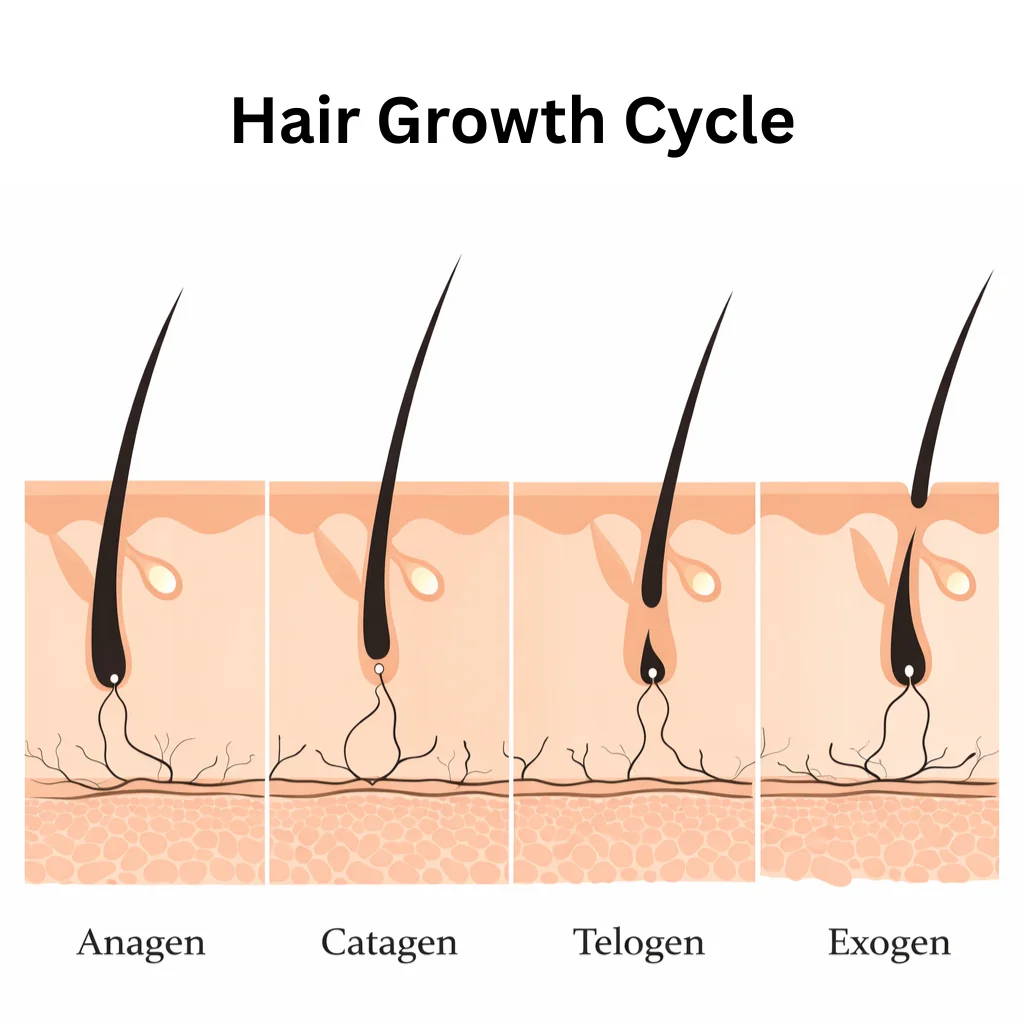
Hair grows in repeating stages. You don’t need to memorize terms, but understanding the rhythm helps explain why hair regrowth can look uneven after waxing.
- Growing stage (anagen phase): Hair is actively forming under the skin and pushing through the skin’s surface.
- Transition stage: Hair growth slows as the hair shaft starts detaching from its blood supply.
- Resting and shedding stage: Hair releases and falls out while the follicle pauses before the next growth cycle.
Why Timing Matters for What You See
Why Regrowth Can Look or Feel Different
Tapered Tips vs Blunt Ends
Mixed Growth Stages After Your First Wax
Your first wax does not remove every single hair. Some hairs are too short or still in a resting phase below the skin at the time of your appointment. When those hairs appear 1–2 weeks later, it can look like fast regrowth, but it is simply hair that was not ready the first time.
When Hair Looks Darker
Hair can look darker on very fair skin, damp skin, or under bright lighting. Short hairs can also appear thicker because you are seeing the base of the hair shaft near the root, which is wider than the tip. Hormonal changes such as puberty, pregnancy, postpartum shifts, or certain medications can increase hair growth in specific areas, but this is related to hormones, not waxing.
What Consistent Waxing Does Over Time
- Finer strands and slower regrowth: Repeatedly removing hair from the root can lead to softer, thinner strands as new hair cycles in. Many people find they can go longer between appointments because regrowth takes more time to feel prickly, especially when paired with good pre and post waxing care for smoother skin.
- Sparser regrowth in some areas: With frequent waxing, some hair follicles may stay in a resting phase longer. This can show up as lighter growth or small gaps in high-density areas like the legs, underarms, or bikini line, depending on body hair patterns and skin types.

How to Get Smoother, Longer-Lasting Results
Prep Before Your Appointment
- Let hair grow to about a grain of rice (¼ inch). Too short and the wax strip cannot grip the hair, too long and it may feel more tuggy.
- Gently exfoliate 24–48 hours before your visit to lift dead skin cells and help free trapped tips, which supports more even hair removal.
- Come in with clean, dry skin and skip heavy oils or thick lotions that day so waxing removes hair cleanly from the root.
- If you have sensitive skin, ask about calming options used in professional waxing services or take an over-the-counter pain reliever 30–45 minutes ahead, if appropriate for you.
Aftercare That Helps
- Skip hot tubs, saunas, and sweaty workouts for 24 hours, since heat and friction can irritate open hair follicles.
- Keep hands off freshly waxed skin to avoid transferring bacteria that can lead to ingrown hairs.
- Moisturize daily with a light, fragrance-free formula to support skin feeling smoother and reduce dryness.
- Exfoliate 2–3 times a week once skin feels calm, usually after 48 hours, to clear dead skin so new hair can grow out cleanly.
- If ingrowns are common for you, guidance from Brazilian wax aftercare for calmer skin can help reduce bumps in sensitive areas.
What to Avoid Between Waxes
- Do not shave between appointments. Shaving cuts hair at the skin’s surface and brings back blunt ends, which can make regrowth feel thicker.
- Avoid harsh scrubs or picking at ingrowns. Use warm compresses and gentle exfoliation instead.
- Skip heavy fragrances and tight clothing right after waxing, especially around high-friction areas like the bikini line or underarms.
- Try not to stretch visits too far early on. For most body hair areas, 4–6 weeks helps hair growth cycles stay more in sync for longer-lasting results.
Waxing doesn’t make hair thicker. What you’re seeing between appointments comes down to timing and texture, tapered tips, mixed growth stages, and the look of short hairs near the root. With a steady schedule, many people notice softer strands, slower regrowth, and sparser areas over time.
If hormones or medications are part of the picture, sharing that with your waxer helps shape better timing and aftercare for your skin. At WAXBARE, we focus on professional waxing supported by proper pre- and post-wax care, so your skin stays calm while hair growth patterns start to settle.
If you’re new to waxing, give it 2–3 visits before judging the results. Hair growth cycles need a little time to sync, and that’s when longer-lasting smoothness usually starts to show.

Hair Regrowth FAQs
What’s the Truth — Does Waxing Make Hair Thicker?
Why Does My Hair Look or Feel Thicker After a Wax?
This comes down to timing and texture, not thicker hair. After a first wax, some hairs that were too short or in a resting phase may appear 7–10 days later, creating the illusion of faster or thicker regrowth. Short hairs can also look darker at the base, but after 2–3 consistent visits, regrowth usually looks more even.
How Often Should I Wax for Smoother, Longer-Lasting Results?
Every 4–6 weeks works well for most body areas. This timing catches more hairs in the active growth phase at the same time, which helps smooth skin last longer. Let hair reach about 1/4 inch, avoid shaving between appointments, exfoliate regularly, and moisturize to support hair regrowth timelines after waxing.
Does Waxing Reduce Hair Growth Permanently?
No. Waxing is not permanent hair removal. Regular waxing can lead to finer and sparser regrowth over time because some follicles go dormant, but follicles are not destroyed. For long-term reduction, laser or IPL performed by qualified providers is more effective and requires multiple sessions with ongoing maintenance.
Is Waxing or Shaving Better If I’m Worried About “Thicker” Regrowth?
Waxing. Shaving cuts hair bluntly at the skin’s surface, which can make regrowth feel sharp and look darker. Waxing removes the entire hair, so new growth starts with a tapered tip that feels softer. Good aftercare also helps reduce razor burn and ingrown hairs, and no, waxing does not make hair thicker.


0 comments