
How To Get Wax Off Skin Safely (Without Damaging Your Client’s Barrier)
Wax that will not budge is more than a minor annoyance in a professional setting. Stuck wax can delay your next client, irritate already sensitized skin, and in worst cases trigger lifting or post-wax hyperpigmentation. Knowing exactly how to get wax off skin safely is part of our job as professionals, just like sanitation or temperature control.
In this guide, we walk through why wax clings to skin, when it is not safe to keep trying at home, and step-by-step methods to remove different types of wax. We will also look at aftercare and prevention, so we spend less time fighting residue and more time giving clients smooth, healthy results.
Why Wax Sticks To Skin In The First Place
Wax is designed to grab onto hair, but it will always have some affinity for the skin itself. Several factors make wax cling:
- Lipids and wax resins bond together: Skin has natural oils and sebum. Traditional soft and hard waxes contain resins and rosin derivatives that love those oils, so they form a tight bond on the surface.
- Temperature and viscosity: If wax is applied too hot or too thin, it can spread beyond the hair and sit closer to the epidermis. With hard wax, cooling too quickly can cause it to set and feel difficult to lift, while soft wax does not have a cooling phase that affects performance in the same way.
- Lack of barrier products: Working on dry, stripped skin without a pre-wax oil or lotion means wax has direct contact with the top skin cells. That increases the risk of lifting and stubborn residue.
- Overworking an area: Going over the same strip more than once or twice raises friction and irritation. The skin may swell slightly, which can trap small patches of wax.
Safety First: When You Should Not Continue Wax Removal
Before we reach for oil or a wax remover, we need to decide if it is safe to continue during a service. As professionals, we should recognize warning signs early and know when to stop to protect the skin barrier.
We should not keep trying to remove wax if we see or suspect:
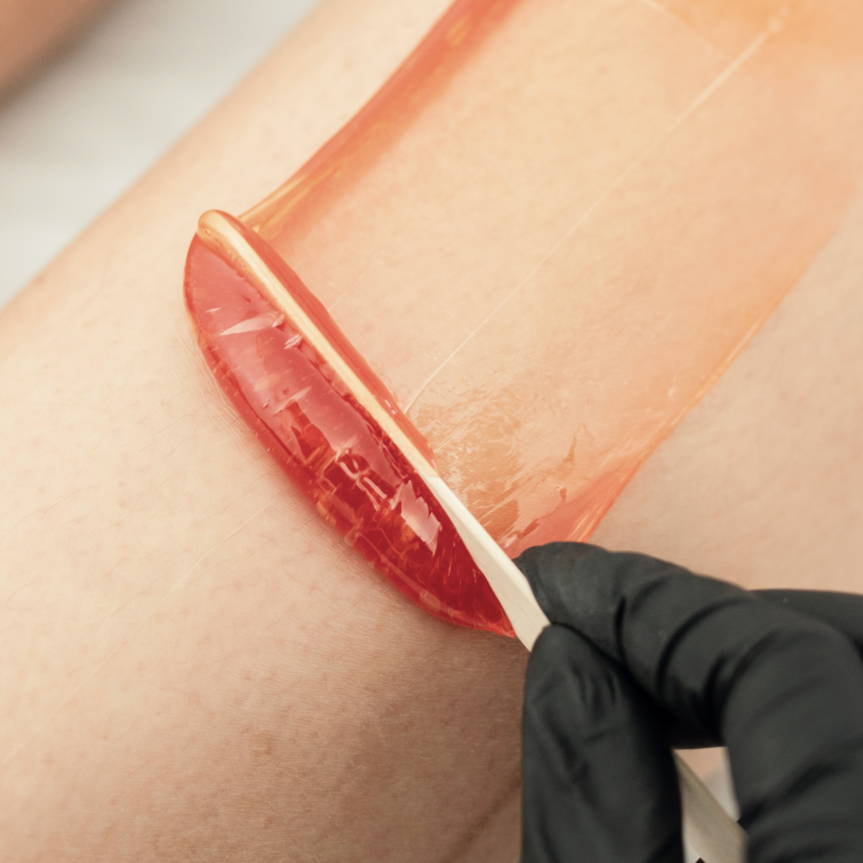
- Skin lifting or raw, pink tissue: If the surface looks shiny, wet, or shows a sharp outline where skin has lifted with the strip, further manipulation increases the risk of injury.
- Blistering or significant swelling: This may indicate a burn or severe irritation. Wax removal is no longer the priority. Cooling and assessment come first.
- Allergic reaction signs: Rapid swelling, itching, burning, or hives around the waxed area can signal sensitivity to resins, fragrance, or other ingredients.
- Clients on high-risk medications or actives: Accutane, strong topical retinoids, recent chemical peels, or laser treatments raise the risk of damage if the area is overworked.
- Stop removing any remaining wax mechanically.
- Cool the area with a clean, cool (not icy) compress.
- Apply a bland, fragrance-free barrier product if the skin is compromised.
- Recommend medical evaluation if the area appears severely burned, very swollen, or unusually painful.
Step-By-Step: How to Remove Residue from Different Wax Types
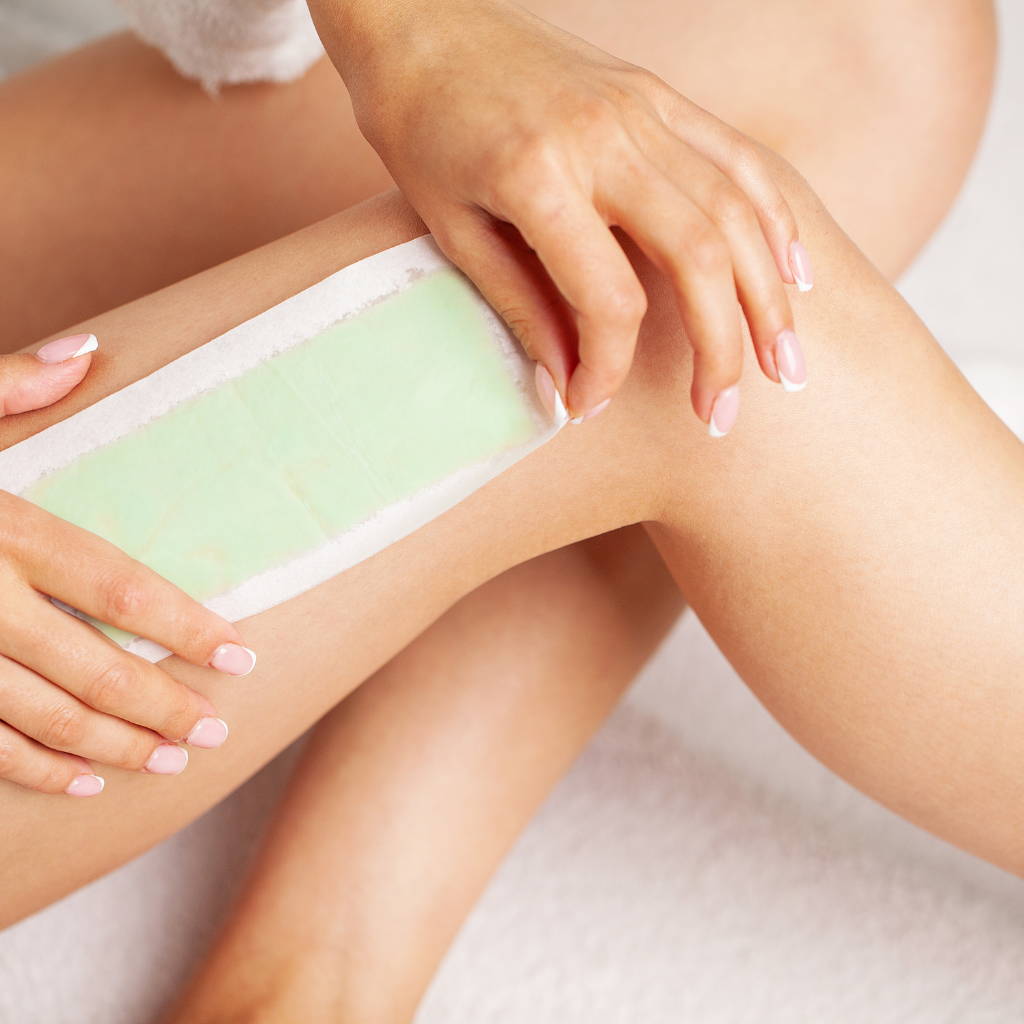
Soft wax residue is usually a thin, sticky film that clings to the skin after we have removed the strip. Trying to scrape it off with our nails will only irritate the epidermis.
Instead, we can:
- Apply a small amount of post-wax oil to a cotton pad or non-woven strip, not directly to the skin at first. Professional post-depilatory oils are ideal because they are designed to dissolve wax resins.
- Press, then glide gently over the sticky area. We should let the oil sit for a few seconds so it can soften the wax before we wipe.
- Repeat with fresh pads until the skin feels smooth. Using new pads avoids simply smearing the same residue around.
- Finish with a mild cleanser, followed by our recovery serum to remove excess oil and support the skin barrier, especially on breakout-prone areas.
Hard Wax Stuck To Skin
- Check the edge. Most hard wax leaves a visible border or lip. We can gently flick that edge up with our fingers while supporting the surrounding skin.
- Stabilize the skin. With the free hand, hold the skin taut, then peel the wax back quickly and close to the surface, not upward.
- Use a small amount of post-wax oil around the remaining pieces to help loosen the edges. Residual wax can also be removed with lukewarm water.
- Never use metal tools directly on the skin to pry off hard wax. If we need a tool, a disposable wooden applicator with rounded edges is safer.
If a large patch of hard wax is stuck and the area already looks very red or angry, it is better to soften it with oil and remove it slowly in smaller pieces rather than one big yank.
Sugar Wax And Water-Soluble Formulas
Sugar wax is more forgiving because it is water-soluble. The removal logic is different from resin-based formulas.
We can usually:
- Apply lukewarm water with a soaked washcloth or gauze and press it on the wax. The water will start to dissolve the sugar.
- Let it sit for 30 to 60 seconds, then gently massage in circular motions. The wax should start to break apart.
- Rinse and repeat until the area is clear.
- Follow with a light lotion to restore comfort.
We should avoid switching to oil first with sugar, since oil and water do not mix well and can make the dissolving process slower.
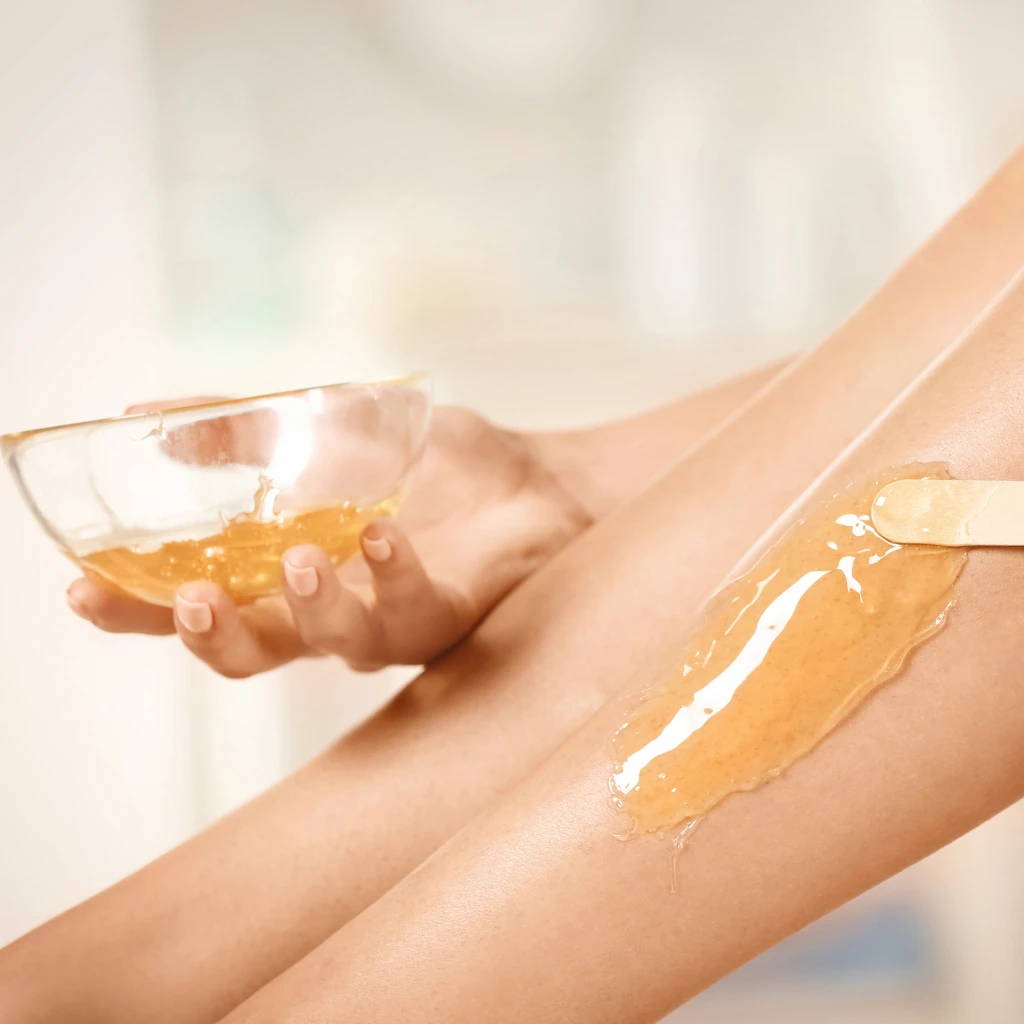
Gentle Methods To Remove Wax From Skin
Once we have a sense of the wax type and the skin's condition, we can choose the gentlest tool for the job. In a professional setting, these are the methods we reach for most often.
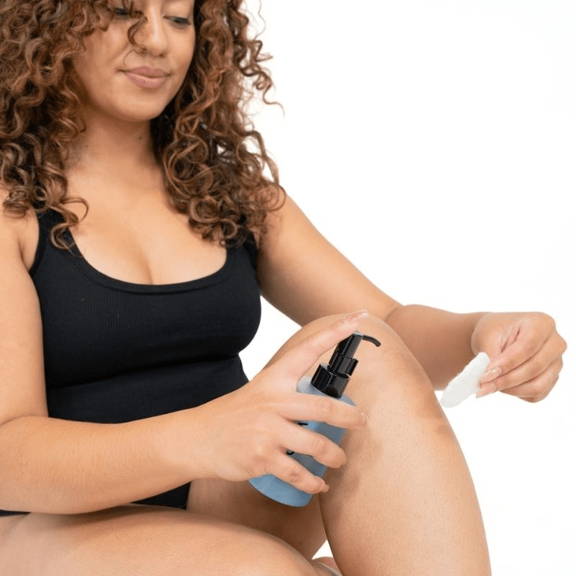
Using Post-Wax Oil
Immediate Steps When Bumps First Appear
Water alone will not lift traditional wax, but it is vital for finishing and calming the skin.
We like to:
- Use a warm (not hot) damp cloth to soften any lingering film.
- Follow with a soap-free or low-foaming cleanser, especially on the face, chest, or back.
- Pat dry rather than rubbing.
For sugar wax, as mentioned earlier, warm water is the main removal tool. For resin-based waxes, think of water and mild cleansers as a clean-up and comfort step after oils have done the heavy lifting.
What Not To Do When Wax Won’t Come Off
Once the wax is off, our focus should shift to calming the skin and restoring its barrier. Proper aftercare reduces redness, itching, and the chance of ingrown hairs.
We like to build post-wax care around three goals:
- Soothe and reduce inflammation
- Protect the barrier
- Prevent infection and ingrowns
- Applying a cool compress for a few minutes after waxing and residue removal.
- Using a fragrance-free post-wax serum with calming ingredients such as aloe, bisabolol, allantoin, or panthenol.
- Adding a light non-comedogenic oil on very dry areas to seal in moisture.
- Advising clients to avoid tight clothing, heavy exercise, and hot baths for 24 hours after bikini or body waxing.
- Recommending gentle exfoliation starting 48 to 72 hours after the service to reduce ingrowns, using a mild chemical exfoliant or a soft cloth instead of harsh scrubs.
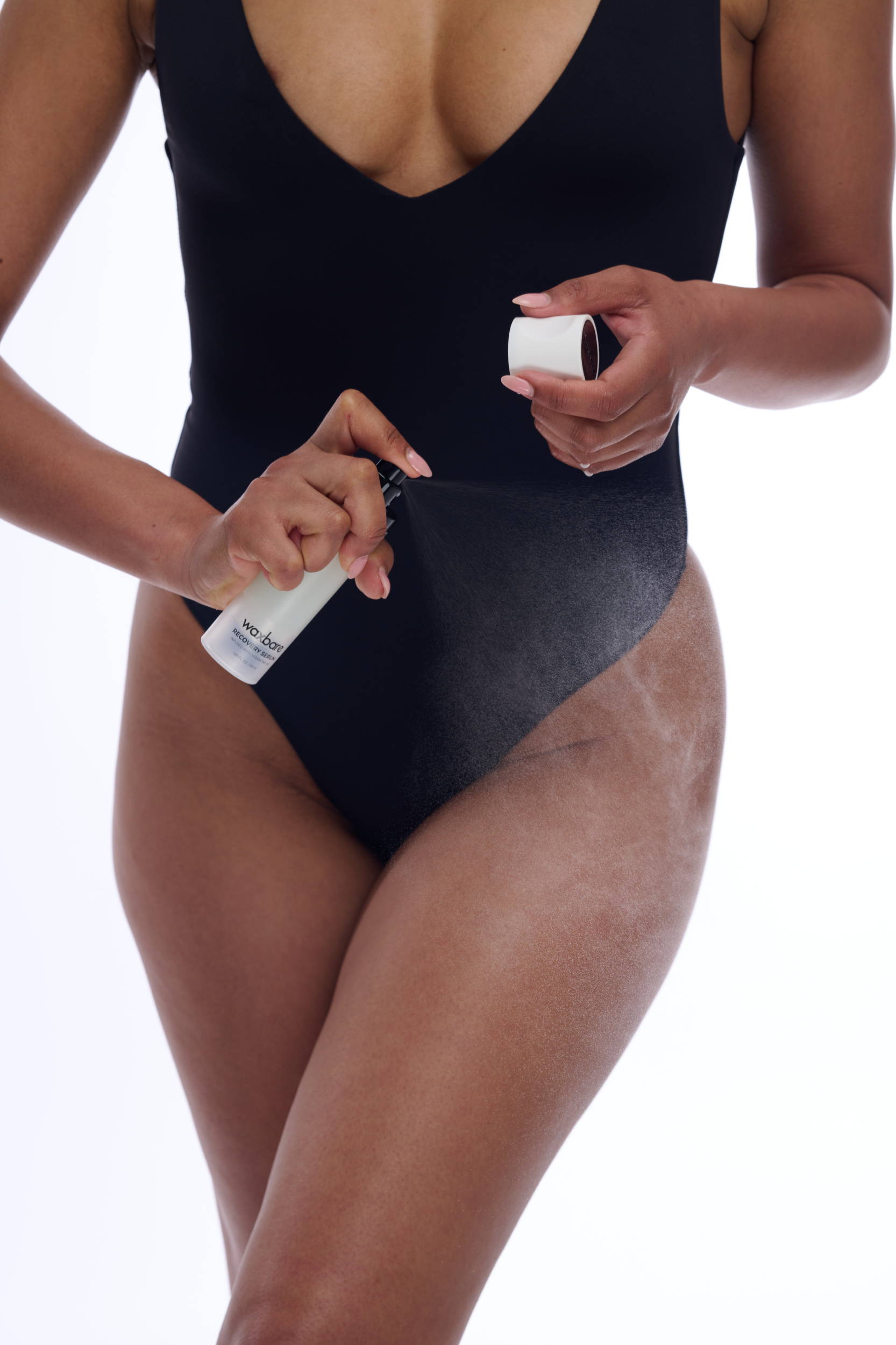
Prevention: How To Stop Wax From Sticking Next Time
The best way to get wax off skin is to keep it from sticking too aggressively in the first place. Technique, product choice, and preparation all play a role.
In our own practice, these steps make the biggest difference:
- Prep the skin correctly: Clean with a gentle, alcohol-free cleanser to remove makeup, sweat, and surface oils without stripping. Then apply a thin layer of pre-wax oil or lotion, especially when using hard wax.
- Use the right wax for the area: Hard wax generally performs better on sensitive areas and coarse hair, while soft strip wax is efficient for larger body zones with finer hair. Sugar is ideal where clients are extremely sensitive or prefer a more natural option.
- Monitor temperature carefully: Wax that is too hot flows into every tiny crevice and is harder to remove; wax that is too cool can clump and stick. We should always test on our own inner wrist before touching the client.
- Control thickness and direction: Apply wax in the direction of hair growth, in even strips of consistent thickness. Very thin layers of soft wax or overly thick blobs of hard wax are the ones that usually leave residue.
- Respect pass limits: One to two passes per area is usually the maximum, depending on the formula. Beyond that, we start lifting and irritating the skin, which then holds on to wax.
Protect the Skin Barrier Every Time You Remove Wax
Knowing how to get wax off skin quickly and safely is part of offering a truly professional waxing experience. It is not just about cleaner results. It is about protecting the skin barrier, preventing complications, and giving our clients confidence that they are in expert hands.
By matching the removal method to the wax type, favoring gentle options like professional post-wax oils and warm compresses, and avoiding panic moves like scraping or over-stripping, we keep skin calm and intact. And by tightening up our prep, product choice, and technique, we can dramatically reduce how often we battle residue in the first place.
In the end, smooth, healthy skin is the real finish line. The more intentional we are with wax removal and aftercare, the closer we get to that goal with every service.


0 comments